|

|
The church had arranged a special praise for the month of Kiahk. We call it 7 & 4.
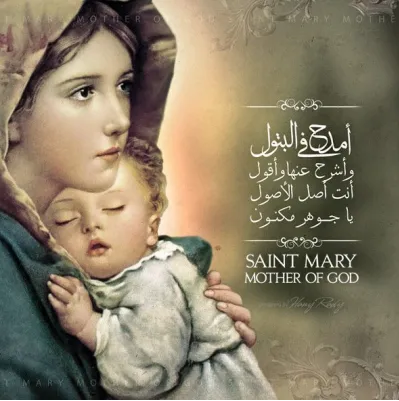
Seven refers to the 7 Theotokias, one for each day of the week. All the Theotokias are praising the Mother of God, Saint Mary and glorify her Son our Lord Jesus Christ.
Four refers to the 4 Hooses. We pray the four Hooses everyday of the week during the midnight praises.
The Midnight Praises during Kiahk are rich with Melodies and Hymns that have been added to the regular midnight praises only to celebrate and prepare the Christians to receive our Lord and Saviour Jesus Christ on the 29th of the month.
The midnight praises rite is as follows:
- Start with the midnight prayers from the book of Agpeya.
- The Long Kiahk Hoos (Elhoos Elkiahky)
- First and second Hooses are chanted. For each Hoos there are special melodies for Kiahk chanted before and after the Hoos
- Third Hoos contains a special long hymn for Kiahk “Tennien” for the three saintly children
- The commemoration of the Saints using Kiahk pecial tune.
- Psali of the day followed by the Theotokia of the day.
- During the Sunday midnight praises, there are pecial expositions to be read after chanting each part of the Theotokia.
- There are lots of melodies for the Lord Jesus and Virgin Mary to be chanted after the prayers of the Theotokia.
- The conclusion of the Adam Theotokias.
- The conclusion of the midnight psalmody
“Keri lay soon”
Please note the month of Kiahk has to have 4 Sundays before the Baramoun of the Nativity feast. That means, if 28th or 29th of Kiahk is Sunday the kiahk praises and rites will start on the last Sunday of the month of Hatour. That is to maintain 4 Sundays for the Month of Kiahk as the church has arranged the Holy Liturgy readings according to the Gospel of Saint Luke.
|
|
“And the Angel of the Lord appeared to him in a flame of fire from the midst of a bush. So he looked, and behold, the bush was burning with fire, but the bush was not consumed. Then Moses said, ‘I will now turn aside and see this great sight, why the bush does not burn’.” (Exodus 3:2-3)
Moses fasted forty days and received the two tablets of the Testimony, written with the finger of God.
That is why we fast the same period of time, to receive the Incarnate Word of God. We have to stay up during the night in worship, raising praises to the Lord, giving thanks, and glorifying God in a state of joy. The Church, guided by the Holy Spirit, expresses the spiritual feelings of the human soul when she lives in the heaven of God, frees herself from the ties of the language, and unites with the Lord. The culmination of these songs is the end of the third Ode: “Praise the Lord.” Let our souls wait for the coming of Lord Jesus Christ.
“Let my mouth be filled with Your praise and with Your glory all the day.” (Psalm 71:8)
When David the Prophet said, “Seven times a day I praise You, because of Your righteous judgments” (Psalm 119:164), he clarified that seven is a complete number. In the same way, the Church organized the Canonical hours, or the Seven-hour prayers, to be prayed all day long. The rite that characterizes the Coptic month of Kiahk emphasizes this fact. This rite is known as “Seven and Four.” It highlights seven hymns for glorifying the Mother of God, the Theotokos; they are sung on each of the seven days of the week to remind us of perpetual worship; and four Odes from the Holy Bible.
The meaning of some words used in the Psalmody:
“Theotokia” (Theotokos): to glorify the Virgin St. Mary. It is a Greek word which means “Mother of God.” It includes a group of Christian dogmas, which are written in Coptic poetic language, followed by Glorification of the Heavenly Father, then the Lady Virgin.
Hoas: a Coptic word which means “Praise.”
The four Odes are quoted from the Old Testament:
The First Hoas of Praise: This is the Song of Moses the Prophet and the Children of Israel. The Church sings this song to imitate them and to glorify and thank God because He saved us from the land of bondage and granted us the freedom of the Children of God.
The Second Hoas (Psalm 136): “Give thanks to the Lord” to recognize His greatness and mercy; the Church remembers the mercies of God, hoping for His Kingdom.
The Third Hoas: The Song of the Three Young Men (from the Apocrypha)
The Fourth Hoas: The group of Psalms 148, 149 & 150 we thank the Lord for His mercies and express our delight for the inheritance and salvation.
Lobsh: an interpretation or explanation; it follows the hymn of praise or the Theotokia.
Epsalia: a hymn in poetic form and whose stanzas are composed in the order of the alphabets.
The basic system of Annual Holy Psalmody necessitates singing the first three Odes with their interpretations (Lobshes), then the Song of the Three Young-men, then the commemoration and the doxologies, then the fourth Ode, and then the Epsali and the Theotokia of Sunday.
But the rite of singing the Psalmody in the blessed month of Kiahk is most enriching, abundant and enjoyable to anyone who practices singing its hymns.
Following is a short presentation of its basic outline and the additional melodies, songs, readings, and methods. All this is included in the Book of Holy Psalmody for the Coptic Month of Kiahk.
There is a large group of hymns organized to accompany each Theotokia. They are divided into two main groups, “Adam” and “Watis” (the Bush Psali), according to the beginning of two famous hymns:
The first hymn is: “Adam the first who is created, you brought him back, O Mother of Jesus, from the land of labor and toil, O Virgin Mary.”
The second hymn is: “The burning bush, seen by Moses in the desert, and the fire burning inside it, but never hurting or harming it.”
The first type of melody has a special tone and is devoted for Sunday, Monday and Tuesday.
The second type is characterized by its long tone and is sung on the other days of the week.
There are several hymns that are sung with these two melodies. There are also hymns which are arranged to be sung with the four Odes, to explain their meaning and repeat the same ideas; some of them are sung during Vespers or Matins.